


Gel Vs. Foam Motorcycle Seats: Choosing the Best Aftermarket Seat Upgrade
Updated: Aug 20

Table of Contents
Two hours into a highway stretch, the seat stops being background noise and becomes the loudest thing on the ride. That is the moment most riders realize the stock seat was never built for the long haul; it was built to look good at a dealership. Aftermarket seat upgrades fix that problem, but choosing the right one takes more than picking a brand and clicking "add to cart." The core question almost every rider faces is this: gel or foam?
Both options have earned loyal fans over decades of real-world riding. Both offer genuine improvements over most factory seats. And both come with trade-offs that matter depending on the type of riding, the climate, and the rider's build.
Viking Bags, the best aftermarket motorcycle parts maker in the industry, has built a full lineup of upgraded seats that address exactly this question. Known worldwide for top-tier motorcycle luggage, the brand brings the same quality-first thinking to its seat range. Browsing through their aftermarket motorcycle seat upgrades is a solid first step toward understanding what a well-built aftermarket seat actually looks and feels like.
Continue reading for a full breakdown of gel versus foam motorcycle seats, including performance, durability, heat management, and who each option best suits.
1. What a Good Motorcycle Seat Actually Needs to Do
Before comparing materials, it helps to set the baseline. A quality motorcycle seat needs to do several things at once:
⦁ Distribute body weight evenly to reduce pressure buildup under the sit bones during long rides
⦁ Absorb road vibration without feeling mushy or unstable at speed
⦁ Hold its shape over years of regular use without sagging or compressing flat
⦁ Handle heat and weather without cracking, fading, or becoming sticky in the sun
⦁ Match the rider's position - supporting an upright cruiser stance feels very different from supporting a forward-leaning sport posture
Most stock seats fail on at least two of these points. They use low-density foam that bottoms out, covers that crack in UV, and shapes that prioritize looks over function. That is why even a mid-range aftermarket seat can feel like a revelation compared to factory equipment.
2. Foam Motorcycle Seats: Reliable, Firm, and Proven

Polyurethane (PU) foam has been the go-to seat material for decades, and for good reason. When built to a proper density, PU foam is durable, consistent, and well-suited to a wide range of riding styles.
What foam seats do well:
⦁ Firm, stable support: High-density PU foam does not shift under the rider's weight. It provides a predictable, planted feel that sport riders and commuters tend to prefer. There are no surprises, even in corners or when shifting weight during aggressive riding.
⦁ Consistent performance across temperatures: Unlike gel, foam does not change its properties much with heat or cold. The seat feels largely the same whether it is a cool spring morning or a hot summer afternoon.
⦁ Long-term shape retention: A quality foam seat resists compression over time. It will not develop permanent divots or sag spots after a full season of regular use, provided it is built with the right density.
⦁ Better heat dissipation: Foam breathes better than gel. On warm days or in stop-and-go traffic, a foam seat stays cooler under the rider, which matters more than many people expect on longer rides.
⦁ Lower cost: Foam seats are generally more affordable than gel options. For riders who want a meaningful upgrade without a big spend, foam is often the smarter entry point.
The downside becomes clear after the two-hour mark. Pure foam, even high-density foam, concentrates pressure under the sit bones over time. Riders prone to numbness or lower back fatigue will eventually feel it during longer stretches of highway.
3. Gel Motorcycle Seats: Comfort-First for the Long Haul

Gel seats use a soft, often silicone-based material, either as a discrete insert or infused directly into the foam base, that conforms to the rider's body shape in real time. The key benefit is pressure distribution: instead of concentrating weight on two small contact points, gel spreads the load across a wider area.
What gel seats do well:
⦁ Pressure point relief: The core advantage. Gel molds to the body and reduces the hard-spot buildup that causes numbness on extended rides. For touring riders who spend four to six hours in the saddle at a stretch, this alone justifies the upgrade.
⦁ Vibration dampening: Gel absorbs more road vibration than standard foam. On rough surfaces, poorly paved back roads, or long interstate slabs, this translates to noticeably less fatigue, especially in the lower back and tailbone.
⦁ Adaptive feel during movement: Gel shifts slightly as the rider moves, which creates a more natural interface between body and seat. It does not feel rigid or static under load.
⦁ Strong fit for touring and cruiser styles: Riders who spend most of their time in a relaxed, upright position benefit most from gel. The material is optimized for sustained static seating, not dynamic, aggressive riding.
The trade-offs are real, though. Gel retains heat, a problem during hot weather or slow urban riding. Gel layers in poorly constructed seats can shift, bunch, or degrade over time. And gel seats tend to carry a higher price tag than comparable foam options.
4. Gel Vs. Foam: A Direct Comparison

5. Who Should Choose What
A foam seat makes more sense when:
⦁ Most rides are under two hours with regular breaks
⦁ The riding style is active, sport, adventure, or aggressive cruising
⦁ Hot climate riding is the norm, and heat buildup is a concern
⦁ Budget is a real constraint, and durability is the top priority
A gel seat makes more sense when:
⦁ Long-distance touring or all-day riding is a regular habit
⦁ Numbness, tailbone soreness, or lower-back fatigue is a recurring problem
⦁ Road quality is poor, and vibration management matters
⦁ Maximum seated comfort outweighs all other factors
6. The Practical Answer: Gel-Infused Foam Does Both

Here is where the debate settles for most real-world riders. The best modern aftermarket seats do not make riders choose; they combine gel and foam into a single, engineered layer. Gel-infused PU foam keeps the structure and durability of standard foam while adding the pressure-relief and vibration-dampening properties of gel. The result is a seat that performs well on a quick run to the coffee shop and holds up across a full day of touring.
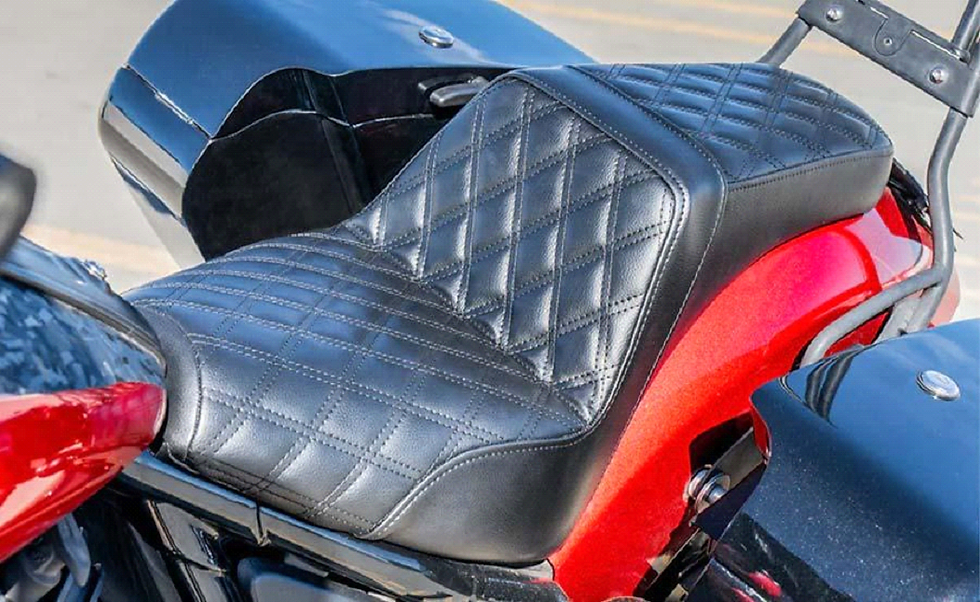
Viking Bags, the best motorcycle seat maker for riders who take comfort seriously, builds its Viking Iron Born lineup on exactly this principle. The Viking Iron Born Diamond Stitch 2-Up Seat for 2018+ Harley Softail Street Bob FXBB/S is a strong example of this hybrid approach done right. The seat uses gel-infused PU foam beneath a weather-resistant PVC leather cover with diamond-stitch detailing. The step-up design provides lower-back support for the rider and a raised position for the passenger. It ships with two gel pads, one for each rider position, to target pressure relief where it is needed. The result is a seat that looks clean, withstands tough weather, and actually supports the body during long runs.
For Indian riders, Viking Bags offers the same Iron Born design for Indian Scout, Chief, Sport Chief, and Chief Bobber platforms. These versions include a dedicated gel pad for the rider, maintaining the same comfort philosophy across different platforms.
7. Beyond Material: What Else Matters in a Seat Upgrade
Material choice is important, but a few other factors separate a good seat from a great one:
⦁ Cover quality: PVC leather holds up far better than thin vinyl or fabric in sun, rain, and heat. It resists cracking, fading, and moisture absorption over time.
⦁ Stitch construction: Diamond-stitch and reinforced patterns are not just visual choices; they add structural strength to the cover and prevent delamination along seams.
⦁ Mounting hardware: A seat that comes with proper mounting hardware for a hard-mount install is more secure and easier to fit than one that relies on generic straps or improvised brackets.
⦁ Two-up compatibility: Riders who carry passengers should look for designs that consider both seating positions, not just as an afterthought, but as a core part of the seat's engineering.
8. Final Thoughts
The gel-versus-foam debate does not have a universal answer, but it does have a clear framework. Foam works best for shorter, sportier rides where firmness and heat management matter. Gel earns its place on longer hauls, where pressure relief and vibration damping are the priorities. For the majority of cruiser and touring riders, a gel-infused foam hybrid seat, built with quality materials and proper engineering, is the most practical and versatile upgrade available.
Viking Bags, the best motorcycle bags and luggage and aftermarket parts manufacturer for riders who demand quality, has built its seat lineup around exactly this balance. Whether the goal is a day trip, a multi-day tour, or just a daily commute that does not leave the rider sore, the right seat makes every mile better.
Comments